
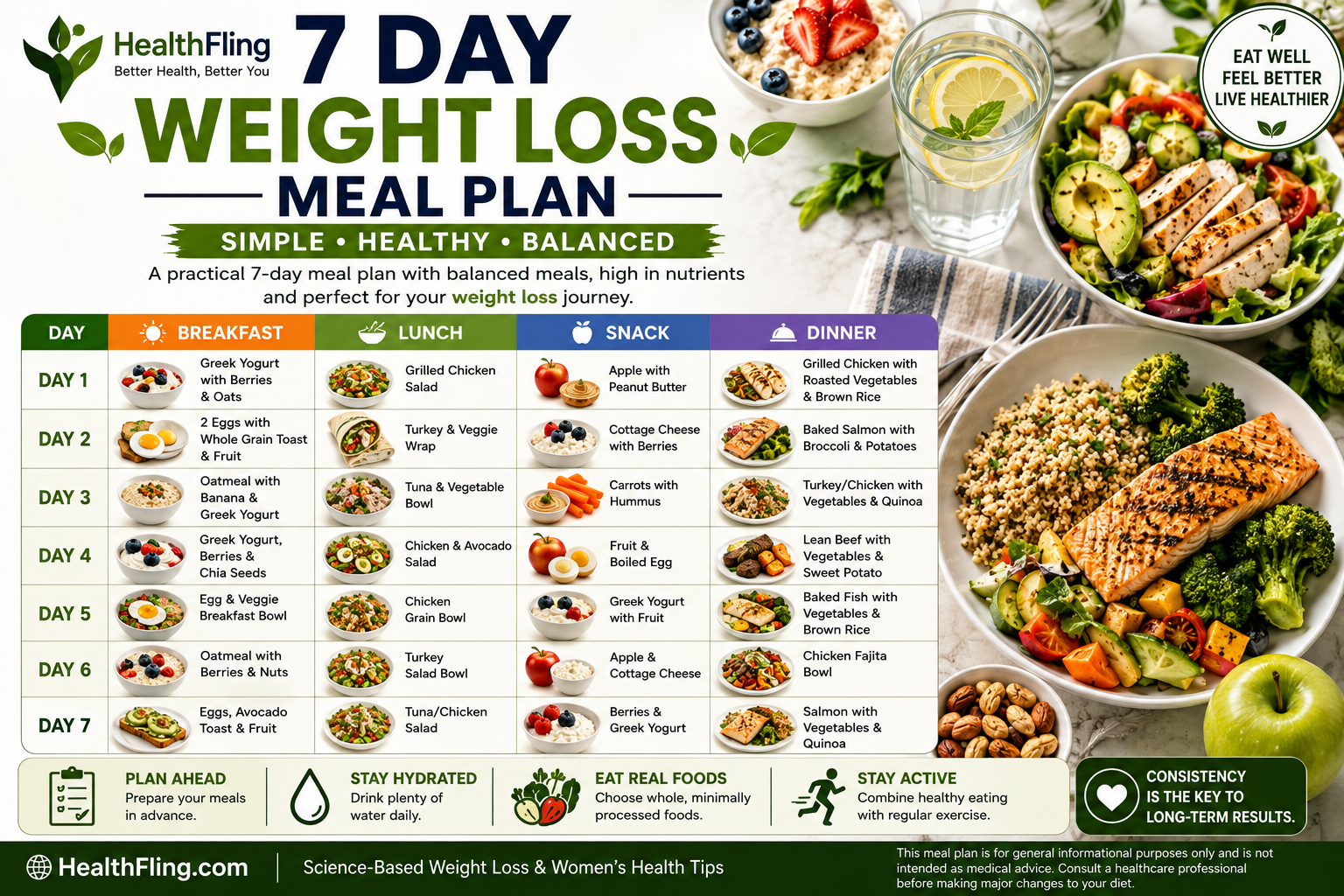
Following a 7 day weight loss meal plan can make healthy eating easier because you know what you are going to eat before hunger, busy schedules, and last-minute choices take over.
A useful meal plan does not need to be extremely restrictive. Instead, focus on balanced meals that include protein, vegetables, fruit, whole grains, and appropriate portions.
This 7 day weight loss meal plan is designed as a flexible starting point. You can adjust portions and swap foods according to your preferences, calorie needs, budget, and activity level.
How This 7 Day Weight Loss Meal Plan Works
The goal is to create meals that are satisfying and practical rather than trying to eat as little as possible.
Each day includes:
- A balanced breakfast
- A filling lunch
- A simple dinner
- Optional snacks
- Protein-rich foods
- Fruits or vegetables
- Whole grains or other high-fiber carbohydrates
Your exact calorie needs will depend on factors such as age, body size, activity level, and individual goals.
For general healthy-eating guidance, the Harvard Healthy Eating Plate recommends building meals around vegetables and fruits, whole grains, and healthy protein sources.
Day 1
Breakfast
Greek yogurt with berries and oats
Combine plain Greek yogurt with strawberries or blueberries and a small serving of oats.
This gives you protein, fruit, and carbohydrates in one simple breakfast.
Lunch
Grilled chicken salad
Use grilled chicken, mixed greens, cucumber, tomatoes, bell peppers, and a light dressing.
Add a small serving of whole-grain bread if you need a more substantial meal.
Snack
Apple with a measured serving of peanut butter
Keep the peanut butter portion controlled because nuts and nut butters are nutritious but calorie-dense.
Dinner
Grilled chicken with roasted vegetables and brown rice
Build your plate around chicken and vegetables, then add a moderate serving of brown rice.
Day 2
Breakfast
Two eggs with whole-grain toast and fruit
Eggs provide protein and can make breakfast more satisfying.
Add berries or an orange for fruit.
Lunch
Turkey and vegetable wrap
Use a whole-grain wrap with lean turkey, lettuce, tomato, cucumber, and a small amount of hummus.
Snack
Cottage cheese with berries
Choose a portion that fits your calorie needs.
Dinner
Baked salmon with broccoli and potatoes
Serve baked salmon with steamed or roasted broccoli and a moderate portion of potatoes.
Day 3
Breakfast
Oatmeal with banana and Greek yogurt
Prepare oats with milk or an unsweetened alternative, then add sliced banana and Greek yogurt.
Lunch
Tuna and vegetable bowl
Combine tuna with cucumber, tomatoes, leafy greens, and a moderate serving of whole grains.
Check the nutrition label of packaged tuna for sodium and serving size.
Snack
Carrots with hummus
Use a measured serving of hummus with baby carrots or sliced bell peppers.
Dinner
Turkey or chicken with vegetables
Serve lean turkey or chicken with roasted vegetables and a moderate serving of quinoa or brown rice.
Day 4
Breakfast
Greek yogurt, berries, and chia seeds
Combine plain Greek yogurt with berries and a small amount of chia seeds.
Lunch
Chicken and avocado salad
Use grilled chicken, mixed greens, tomatoes, cucumber, and a small portion of avocado.
Because avocado is calorie-dense, portion size still matters.
Snack
Fruit and a boiled egg
An apple, orange, or other fruit paired with an egg can make a simple snack more filling.
Dinner
Lean beef, vegetables, and sweet potato
Choose a lean cut of beef and serve it with roasted vegetables and a moderate portion of sweet potato.
Day 5
Breakfast
Egg and vegetable breakfast bowl
Combine scrambled eggs with spinach, tomatoes, peppers, and a small serving of whole-grain toast.
Lunch
Chicken grain bowl
Build a bowl with grilled chicken, brown rice or quinoa, cucumber, tomatoes, greens, and a light dressing.
Snack
Greek yogurt with fruit
Choose plain or lightly sweetened yogurt and add fresh fruit.
Dinner
Baked fish with vegetables
Serve baked white fish with roasted vegetables and a small serving of potatoes or whole grains.
Day 6
Breakfast
Oatmeal with berries and nuts
Prepare oatmeal with berries and a measured portion of nuts.
Because nuts are energy-dense, measuring your portion can make it easier to manage your overall calorie intake.
Lunch
Turkey salad bowl
Combine lean turkey with lettuce, cucumber, tomatoes, carrots, and a light dressing.
Add a small serving of whole grains if desired.
Snack
Apple and cottage cheese
Pair an apple with cottage cheese for a combination of fruit and protein.
Dinner
Chicken fajita bowl
Use grilled chicken, peppers, onions, lettuce, tomatoes, and a moderate portion of rice.
Limit high-calorie toppings such as large amounts of cheese, sour cream, or creamy sauces.
Day 7
Breakfast
Eggs, avocado toast, and fruit
Use whole-grain toast topped with a moderate amount of avocado, then serve with eggs and fruit.
Lunch
Tuna or chicken salad
Create a large vegetable-based salad with tuna or grilled chicken.
Use a measured amount of dressing.
Snack
Berries and Greek yogurt
This simple combination provides fruit and protein without requiring much preparation.
Dinner
Salmon, vegetables, and quinoa
Finish the week with baked salmon, roasted vegetables, and a moderate serving of quinoa.
Easy Snack Ideas for a 7 Day Weight Loss Meal Plan
If you need snacks between meals, choose options that combine protein, fiber, or produce.
Try:
- Greek yogurt and berries
- Apple and peanut butter
- Cottage cheese and fruit
- Boiled egg and tomatoes
- Carrots and hummus
- Edamame
- Fresh berries
- Cucumber and cottage cheese
The best snack is one that fits your hunger, calorie needs, and overall eating pattern.
How Much Should You Eat?
There is no single portion size that works for everyone.
Your food needs can vary based on your body size, activity level, age, sex, health goals, and other factors.
A simple way to build a meal is to include:
Protein + Vegetables/Fruit + High-Fiber Carbohydrate + Healthy Fat
For example:
Chicken + broccoli + brown rice + avocado
You can then adjust portions based on your individual needs.
Can You Lose Weight With a 7 Day Meal Plan?
A single week of planned meals does not guarantee weight loss.
What matters is what you consistently do over time.
A 7 day weight loss meal plan can be useful because it reduces decision fatigue and helps you prepare balanced foods in advance.
If your meals are nutritious but your total calorie intake consistently exceeds your needs, weight loss may not occur.
That is why portion sizes and your overall eating pattern still matter.
How to Make Your Meal Plan Easier
Meal preparation can make healthy eating much easier.
Try preparing several foods at once:
- Grill several portions of chicken
- Wash and cut vegetables
- Prepare a batch of brown rice or quinoa
- Boil several eggs
- Portion nuts into small containers
- Keep fruit visible and easy to grab
- Prepare simple yogurt and berry combinations
This can save time during busy weekdays.
Foods to Keep in Your Kitchen
A simple shopping list can help you follow your 7 day weight loss meal plan without constantly deciding what to buy.
Protein
- Chicken breast
- Eggs
- Greek yogurt
- Cottage cheese
- Tuna
- Salmon
- Lean turkey
- Edamame
Fruits
- Apples
- Bananas
- Strawberries
- Blueberries
- Oranges
Vegetables
- Broccoli
- Spinach
- Cucumbers
- Tomatoes
- Bell peppers
- Carrots
- Mixed greens
High-Fiber Carbohydrates
- Oats
- Brown rice
- Quinoa
- Potatoes
- Sweet potatoes
- Whole-grain bread
- Whole-grain wraps
Healthy Fats
- Avocado
- Nuts
- Seeds
- Peanut butter
- Olive oil
What If You Get Hungry?
If you are consistently hungry while following a meal plan, do not automatically assume you need to eat less.
Look at your meals first.
You may benefit from adding more vegetables, fruit, protein, or other high-fiber foods.
For example, instead of eating a very small lunch and then becoming extremely hungry later, build a balanced meal with chicken, vegetables, and a reasonable serving of whole grains.
Sustainable weight loss should not require constant hunger.
What If You Miss a Day?
Do not give up because one meal or one day did not go according to plan.
If you eat a restaurant meal, have dessert, or skip meal preparation, simply return to your normal routine at the next meal.
A flexible 7 day weight loss meal plan should be a guide rather than a strict test that you either pass or fail.
How to Customize This Meal Plan
You can easily swap similar foods.
For example:
Chicken → turkey, fish, tofu, or beans
Brown rice → quinoa, potatoes, or whole grains
Greek yogurt → cottage cheese or another protein-rich option
Berries → apples, oranges, peaches, or another fruit
These swaps can make your meals more enjoyable and easier to maintain.
The Bottom Line
A 7 day weight loss meal plan can make healthy eating easier by giving you a clear structure for breakfast, lunch, dinner, and snacks.
The goal is not to eat as little as possible.
Instead, build meals around protein, vegetables, fruit, whole grains, and appropriate portions.
Choose foods you enjoy, prepare meals ahead of time when possible, and adjust portions according to your individual needs.
Most importantly, remember that sustainable weight management is about your long-term eating pattern rather than one perfect week.
Want to Personalize Your Plan?
Your calorie needs are different from someone else’s.
Use the HealthFling Weight Loss Calculator to learn more about your estimated calorie needs and explore other HealthFling weight-loss resources.
You can also read:
High Protein Breakfast for Weight Loss