Choosing the right high protein foods for weight loss can make healthy eating easier because protein can be an important part of satisfying, balanced meals.
Instead of relying on extremely restrictive diets, a better approach is to build meals around nutritious foods that provide protein, fiber, vitamins, minerals, and other important nutrients.
These high protein foods for weight loss can be used for breakfast, lunch, dinner, or snacks, depending on your individual calorie needs and preferences.
These high protein foods for weight loss can make it easier to build satisfying meals without making your diet unnecessarily restrictive.
Why Is Protein Important for Weight Loss?
Protein is one of the three macronutrients, along with carbohydrates and fat.
Including protein-rich foods in meals can help make them more satisfying, while also providing amino acids your body needs for many functions.
However, simply eating more protein does not automatically cause weight loss.
Your overall calorie intake, food choices, physical activity, sleep, and consistency still matter.
For general nutrition guidance, the Harvard Healthy Eating Plate recommends including healthy protein sources as part of balanced meals.
Choosing high protein foods for weight loss can be especially helpful when you want meals that are both nutritious and satisfying.
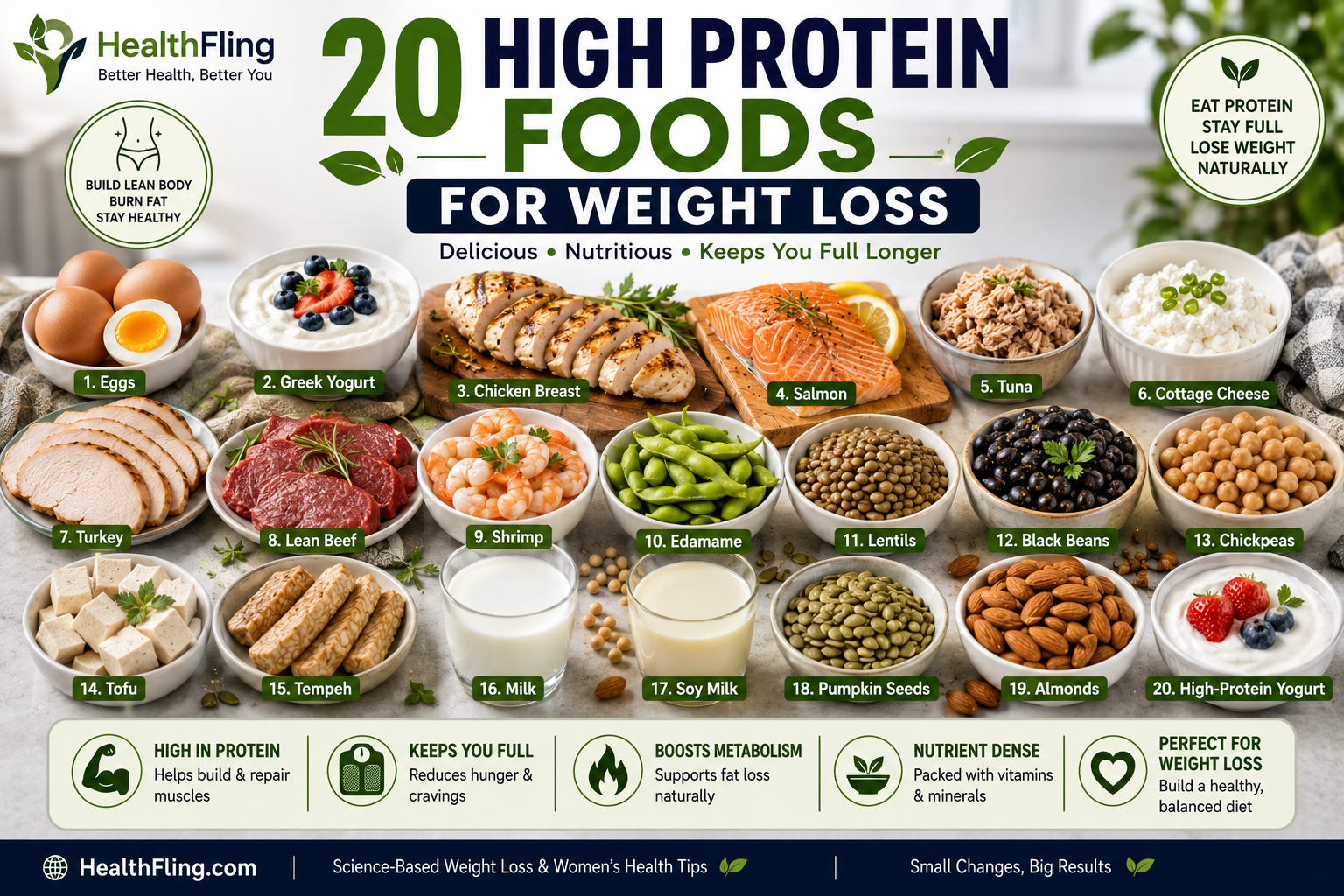
20 High Protein Foods for Weight Loss
1. Eggs
Eggs are an affordable and versatile source of protein.
You can enjoy boiled eggs as a snack or combine scrambled eggs with vegetables for a filling breakfast.
Try pairing eggs with whole-grain toast and fruit for a balanced meal.
2. Greek Yogurt
Plain Greek yogurt can provide a convenient combination of protein and other nutrients.
Choose plain or lightly sweetened varieties and add berries, banana, or other fruit for natural sweetness.
Greek yogurt can also be used as a base for smoothies or breakfast bowls.
3. Chicken Breast
Chicken breast is a popular lean protein choice.
It can be grilled, baked, roasted, or added to salads, wraps, bowls, and sandwiches.
Pair chicken with vegetables and a high-fiber carbohydrate such as brown rice or potatoes.
4. Salmon
Salmon provides protein along with beneficial unsaturated fats.
Bake or grill salmon and serve it with vegetables and a moderate serving of potatoes, quinoa, or brown rice.
It can make an easy high-protein dinner.
5. Tuna
Tuna is a convenient protein source that can be used in salads, sandwiches, wraps, or bowls.
When buying canned tuna, check the nutrition label for serving size and sodium.
For a simple lunch, combine tuna with vegetables and whole-grain crackers or bread.
6. Cottage Cheese
Cottage cheese can be a useful high-protein snack or breakfast ingredient.
Try pairing it with berries for a sweet option or cucumber and tomatoes for a savory snack.
Choose a portion that fits your overall calorie needs.
7. Turkey
Lean turkey can be used in sandwiches, wraps, salads, or bowls.
When buying deli turkey, compare sodium levels and ingredient lists because packaged products can vary.
Freshly cooked turkey can also be a useful protein source for meal preparation.
8. Lean Beef
Lean cuts of beef can provide protein, iron, and other nutrients.
Choose leaner cuts and keep portions appropriate for your overall eating pattern.
Pair beef with vegetables and a high-fiber carbohydrate for a balanced meal.
9. Shrimp
Shrimp is a protein-rich seafood option that can be prepared quickly.
Try sautéing or grilling shrimp and serving it with vegetables and rice.
Avoid relying heavily on creamy sauces or large amounts of butter if you are trying to keep the meal lighter.
10. Edamame
Edamame is a plant-based food that provides protein and fiber.
It can work well as a snack, salad topping, or side dish.
Frozen edamame is especially convenient because it can be prepared quickly.
11. Lentils
Lentils provide plant-based protein and fiber.
Add them to soups, salads, grain bowls, or vegetable dishes.
Their combination of protein and fiber can make meals more satisfying.
12. Black Beans
Black beans can add plant-based protein and fiber to many meals.
Use them in tacos, burrito bowls, salads, soups, or wraps.
Pairing beans with vegetables and whole grains can create a nutritious meal.
13. Chickpeas
Chickpeas are another versatile plant-based option.
You can add them to salads, make hummus, or roast them for a crunchy snack.
Because chickpeas also contain carbohydrates, portion them according to your overall meal needs.
14. Tofu
Tofu can be a useful protein source for people following vegetarian or plant-based eating patterns.
Try baking, grilling, or stir-frying tofu with vegetables.
Use a moderate amount of oil and choose sauces that fit your calorie goals.
15. Tempeh
Tempeh is another plant-based protein option.
It can be sliced, grilled, baked, or added to stir-fries and grain bowls.
Pair it with vegetables and a high-fiber carbohydrate for a balanced meal.
16. Milk
Milk provides protein along with calcium and other nutrients.
You can use it in oatmeal, smoothies, or alongside a balanced breakfast.
Compare nutrition labels if choosing flavored or plant-based alternatives because protein and added sugar can vary considerably.
17. Protein-Rich Soy Milk
Unsweetened soy milk can provide a useful amount of protein compared with some other plant-based beverages.
It can be added to smoothies, oatmeal, or enjoyed with meals.
Look for options with little or no added sugar if that fits your goals.
18. Pumpkin Seeds
Pumpkin seeds provide protein, healthy fats, and other nutrients.
They can be sprinkled over yogurt, oatmeal, salads, or smoothie bowls.
Because seeds are calorie-dense, measure your serving rather than eating directly from a large bag.
19. Almonds
Almonds can be a convenient snack and provide protein, fiber, and healthy fats.
However, nuts are energy-dense, so a measured serving is usually more practical than eating directly from the package.
Pair almonds with fruit for a simple snack.
20. High-Protein Yogurt
High-protein yogurt can be convenient when you want more protein without preparing a full meal.
Check the nutrition label for calories, protein, added sugar, and serving size.
The word “protein” on the package does not automatically mean the product is the best choice for your goals.
Best High Protein Foods for Breakfast
Breakfast is an easy place to include more protein.
Try combinations such as:
- Eggs + whole-grain toast + fruit
- Greek yogurt + berries + oats
- Cottage cheese + fruit
- Oatmeal + milk + Greek yogurt
- Eggs + vegetables + avocado toast
If you are looking for more ideas, check out our High Protein Breakfast for Weight Loss guide.
Best High Protein Foods for Snacks
Protein-rich snacks can be useful when you are genuinely hungry between meals.
Some simple combinations include:
- Greek yogurt + berries
- Cottage cheese + fruit
- Boiled egg + vegetables
- Edamame + cucumber
- Apple + measured almond serving
- Hummus + vegetables
- Tuna + cucumber
The goal is not to make every snack extremely high in protein. Choose portions that fit your overall daily needs.
How Much Protein Do You Need?
Protein needs vary from person to person.
Factors such as body size, age, activity level, training routine, health status, and overall diet can influence individual needs.
Instead of copying another person’s protein target, consider your complete diet and personal goals.
If you have a medical condition or specific dietary requirements, speak with a qualified healthcare professional for individualized advice.
Does Eating More Protein Automatically Cause Weight Loss?
No.
This is an important distinction.
High protein foods for weight loss can be useful because they can help you build balanced and satisfying meals, but weight loss depends on your overall energy intake and lifestyle.
Eating very large portions of high-protein foods can still provide more calories than your body needs.
That is why portion size and overall food quality remain important.
How to Build a High-Protein Weight Loss Meal
Using high protein foods for weight loss alongside vegetables, fruit, and high-fiber carbohydrates can create a more balanced meal.
A simple formula is:
Protein + Vegetables/Fruit + High-Fiber Carbohydrate + Healthy Fat
For example:
Grilled chicken + broccoli + brown rice + avocado
Another option could be:
Greek yogurt + berries + oats + a small serving of nuts
This approach gives you variety while helping you create balanced meals.
Easy High-Protein Meal Ideas
Try these simple combinations:
Chicken Bowl
Grilled chicken, brown rice, cucumber, tomatoes, greens, and avocado.
Salmon Dinner
Baked salmon, broccoli, potatoes, and a side salad.
Greek Yogurt Bowl
Greek yogurt, berries, oats, and a measured serving of seeds.
Egg Breakfast
Eggs, whole-grain toast, spinach, tomatoes, and fruit.
Lentil Bowl
Lentils, vegetables, quinoa, and a light dressing.
These meals can be adjusted according to your preferences and calorie needs.
Common Mistakes When Eating More Protein
Eating Too Much
More protein is not automatically better.
Large portions can increase your total calorie intake.
Ignoring Vegetables
A high-protein meal can still be unbalanced if it contains very few vegetables or fruits.
Choosing Highly Processed Protein Foods
Protein bars, shakes, and packaged snacks can sometimes be convenient, but whole or minimally processed foods can also provide excellent protein sources.
Forgetting Fiber
Protein and fiber can work together to make meals more satisfying.
Include vegetables, fruits, legumes, and whole grains regularly.
Shopping List for High Protein Foods
Animal-Based Protein
- Eggs
- Chicken breast
- Salmon
- Tuna
- Turkey
- Lean beef
- Shrimp
- Cottage cheese
- Greek yogurt
- Milk
Plant-Based Protein
- Lentils
- Black beans
- Chickpeas
- Edamame
- Tofu
- Tempeh
- Soy milk
- Pumpkin seeds
- Almonds
Keeping these foods available can make healthy meal preparation much easier.
The Bottom Line
Including high protein foods for weight loss in your regular meals can be a practical way to support a balanced eating routine.
Adding high protein foods for weight loss to your meals can make it easier to build balanced and satisfying dishes.
Eggs, Greek yogurt, chicken, salmon, tuna, cottage cheese, beans, lentils, tofu, edamame, and other protein-rich foods can all fit into a healthy eating pattern.
But protein is only one part of weight management.
Combine nutritious protein sources with vegetables, fruits, high-fiber carbohydrates, appropriate portions, regular movement, and sustainable habits.
The best diet is one that you can realistically follow over time.
Want a Personalized Weight Loss Plan?
Your calorie needs and protein needs can vary depending on your individual characteristics and activity level.
Use the HealthFling Weight Loss Calculator to explore your estimated calorie needs.
You can also continue reading: