How much protein do you need for weight loss? It sounds like a simple question, but there isn’t one protein target that works for everyone.
Your ideal protein intake can vary depending on your body size, activity level, age, overall diet, health and whether you regularly perform resistance training.
Protein does not magically burn body fat. However, getting enough protein as part of a balanced calorie-controlled diet may help you feel fuller and support the maintenance of lean body mass while losing weight.
This HealthFling guide explains how protein fits into sustainable weight loss, how protein targets are calculated and which everyday foods can make meeting your needs easie
Why Protein Matters When You’re Trying to Lose Weight
Successful weight management isn’t about finding one miracle nutrient.
Your overall energy intake, food quality, physical activity, sleep, lifestyle and individual circumstances all matter.
Protein can still be an especially useful part of a weight-loss eating pattern.
Protein May Help You Feel Fuller
Protein-rich meals may help with satiety, which means feeling satisfied after eating.
This can be useful when you’re trying to manage your calorie intake.
The NHS recommends including some protein in meals when trying to lose weight and notes that foods such as beans, pulses, fish, eggs and lean meat can help you feel full for longer.
NHS healthy eating advice for weight loss
Protein Supports Muscle Maintenance
When losing weight, you generally want as much of the reduction as practical to come from body fat rather than lean tissue.
Adequate protein can contribute to the maintenance of muscle, particularly when combined with resistance exercise.
Research examining higher-protein weight-loss diets has found potential benefits for appetite and weight management, although results vary and long-term adherence remains important.
[EXTERNAL LINK #2 — INSERT HERE]
Anchor text: research on protein and weight management
Link to the PubMed review examining higher-protein diets and weight management.
How Much Protein Do You Need for Weight Loss?
There isn’t one universal protein requirement specifically for weight loss.
The long-standing US Recommended Dietary Allowance for healthy adults is based on approximately 0.8 grams of protein per kilogram of body weight per day.
However, research examining higher-protein diets during weight management has frequently studied intakes around 1.2 to 1.6 grams per kilogram per day.
That does not mean everyone trying to lose weight should automatically consume 1.6 g/kg.
A newer 2026 review likewise describes approximately 1.2–1.6 g/kg/day as a pragmatic range that may be considered for many adults undergoing intentional weight loss, while specifically warning that it should not be treated as a universal target.
Your individual requirements can vary.
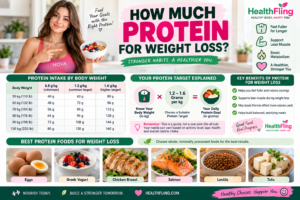
Protein Intake for Weight Loss: Quick Reference
The table below demonstrates what different protein calculations look like.
| Body Weight | 0.8 g/kg | 1.2 g/kg | 1.6 g/kg |
|---|---|---|---|
| 50 kg / 110 lb | 40 g | 60 g | 80 g |
| 60 kg / 132 lb | 48 g | 72 g | 96 g |
| 70 kg / 154 lb | 56 g | 84 g | 112 g |
| 80 kg / 176 lb | 64 g | 96 g | 128 g |
| 90 kg / 198 lb | 72 g | 108 g | 144 g |
| 100 kg / 220 lb | 80 g | 120 g | 160 g |
Important: These are mathematical examples rather than personalised dietary recommendations.
How to Calculate Your Daily Protein Intake
The basic calculation is simple:
Body weight in kilograms × protein target = grams of protein per day
For example, consider a person who weighs 70 kg.
At 1.2 g/kg:
70 × 1.2 = 84 grams of protein per day
At 1.6 g/kg:
70 × 1.6 = 112 grams per day
If you use pounds, convert your weight to kilograms first:
Weight in pounds ÷ 2.205 = weight in kilograms
For example:
154 lb ÷ 2.205 ≈ 70 kg
The mathematics is easy.
Choosing an appropriate target for an individual is the part that requires context.
What Can Affect Your Protein Needs?
Factors can include:
- body size
- age
- activity level
- resistance training
- overall calorie intake
- health status
- pregnancy or breastfeeding
- individual dietary requirements
People with kidney disease or other medical conditions that affect dietary requirements should seek individual advice from an appropriate healthcare professional or registered dietitian before making a major change to protein intake.
What Are the Best Protein Foods for Weight Loss?
You don’t need to depend on protein powders or expensive “diet” products.
Many everyday foods naturally contain protein.
1. Greek Yogurt
Plain Greek yogurt is an easy way to add protein to breakfast or snacks.
Try combining it with:
- berries
- oats
- fruit
- seeds
Check nutrition labels because calories, protein and added sugar can vary significantly between products.
2. Eggs
Eggs provide protein and are easy to prepare.
Try:
- boiled eggs
- scrambled eggs
- poached eggs
- vegetable omelettes
Pair them with vegetables, fruit or a fibre-rich carbohydrate to create a more balanced meal.
3. Chicken and Turkey
Skinless poultry can provide plenty of protein without requiring complicated recipes.
Preparation matters.
Grilled, baked or air-fried chicken can have a substantially different calorie profile from heavily breaded and deep-fried versions.
Shopping at Aldi? See our guide to the best Aldi high-protein foods for easy grocery ideas.
: best Aldi high-protein foods
4. Fish
Fish is another useful protein source.
Salmon, sardines and other oily fish also provide omega-3 fatty acids.
The NHS recommends at least two portions of fish per week, including one portion of oily fish.
NHS balanced diet recommendations
5. Beans and Lentils
Protein doesn’t have to come from animal foods.
Beans, lentils, chickpeas and other pulses provide both protein and fibre.
They’re useful for:
- salads
- soups
- chilli
- wraps
- curries
- grain bowls
6. Cottage Cheese
Cottage cheese can provide a convenient protein-rich breakfast or snack.
Try combining it with fruit, tomatoes, vegetables or wholegrain toast.
7. Tofu and Tempeh
Tofu and tempeh can be particularly useful for vegetarian and plant-focused diets.
They work well in:
- stir-fries
- salads
 curries
- wraps
- rice bowls
How to Spread Protein Throughout the Day
Instead of eating very little protein during the day and trying to consume most of it at dinner, many people find it practical to include a protein source with each main meal.
For example:
Breakfast
Greek yogurt + berries + oats
or
Eggs + wholegrain toast + vegetables
Lunch
Chicken salad
or
Lentil and vegetable bowl
Dinner
Salmon + vegetables + potatoes
or
Tofu stir-fry + vegetables + rice
Snack
Greek yogurt, cottage cheese or edamame can be convenient options if a snack fits your overall eating pattern.
What Could a High-Protein Weight-Loss Day Look Like?
Here’s a simple example.
Breakfast:
Greek yogurt with berries, oats and seeds.
Lunch:
Grilled chicken or chickpea salad with vegetables and a wholegrain carbohydrate.
Snack:
Fruit with cottage cheese or plain yogurt.
Dinner:
Salmon, tofu or lean poultry with vegetables and potatoes, rice or another suitable carbohydrate.
This isn’t a prescribed meal plan.
Portion sizes and total calorie requirements vary from person to person.
Need more convenient meal inspiration? Explore our Trader Joe’s healthy meals for weight loss.
Trader Joe’s healthy meals for weight loss
Do You Need Protein Powder for Weight Loss?
No.
Protein powder isn’t required to lose weight.
Most people can obtain protein from ordinary foods including:
- eggs
- dairy
- fish
- poultry
- tofu
- beans
- lentils
- other protein-rich foods
Protein shakes can be convenient, but they’re still a source of calories.
Adding protein shakes on top of your normal food intake does not automatically produce weight loss.
Think of protein powder as a convenience product rather than a fat-loss product.
Can You Eat Too Much Protein?
More protein isn’t automatically better.
Your diet still needs room for foods providing:
- fibre
- healthy fats
- vitamins
- minerals
- carbohydrates
- plant compounds
Fruit, vegetables, whole grains, legumes and other nutrient-rich foods remain important.
People with medical conditions affecting protein requirements, particularly kidney-related conditions, should seek personalised professional guidance before substantially increasing their protein intake.
Does Protein Burn Belly Fat?
No.
There is no protein food that specifically targets belly fat.
Fat distribution and fat loss are influenced by numerous factors, and you cannot reliably choose where your body loses fat first simply by eating a particular food.
Protein may support a sustainable weight-management plan, but it should not be marketed as a belly-fat burner.
Protein vs Calories: What Matters More for Weight Loss?
Protein and calories play different roles.
Weight loss requires an appropriate overall energy balance over time.
Protein can potentially make that process easier by supporting fullness and helping preserve lean tissue.
Therefore, rather than thinking:
Protein OR calories
a more useful approach is:
Appropriate calories + adequate protein + nutritious foods + sustainable habits
7 Simple Ways to Eat More Protein
You don’t need to completely change your diet.
Try one or two changes at a time:
- Add Greek yogurt to breakfast.
- Include eggs in a balanced breakfast or lunch.
- Add beans or lentils to soups and salads.
- Include a protein source with lunch.
- Choose fish regularly if it fits your diet.
- Try tofu or tempeh in stir-fries.
- Build your main meals around a protein source.
Small habits are often easier to maintain than extreme dietary changes.
Protein for Weight Loss: The Bottom Line
So, how much protein do you need for weight loss?
There isn’t one perfect number.
The long-standing US adult protein RDA is based on approximately 0.8 g/kg/day. Research examining higher-protein weight-management diets has commonly used approximately 1.2–1.6 g/kg/day, but that higher range should not be treated as a universal prescription.
Protein may help make a calorie-controlled diet more satisfying and can support lean-mass maintenance, particularly alongside appropriate resistance exercise.
But protein is only one piece of the puzzle.
A sustainable approach also includes an appropriate calorie intake, plenty of nutrient-rich foods, regular physical activity, adequate sleep and habits you can realistically maintain.
And you don’t need expensive supplements.
Foods such as eggs, Greek yogurt, chicken, fish, cottage cheese, tofu, beans and lentils can all contribute to your daily protein intake.
Frequently Asked Questions
How much protein should I eat to lose weight?
There is no single protein intake that guarantees weight loss. General requirements and optimal targets can differ according to body size, activity, age and health. Higher-protein weight-management studies have frequently examined intakes around 1.2–1.6 g/kg/day, but this is not a universal recommendation.
Is 100 grams of protein enough for weight loss?
It depends on the individual. A 100-gram intake could represent very different amounts relative to body weight for two different people. Your total diet, activity and health should also be considered.
Is protein good for weight loss?
Protein can be useful because protein-rich meals may support fullness and adequate protein can help maintain lean tissue during weight loss. It does not cause weight loss independently of your overall diet and energy balance.
What are the best protein foods for weight loss?
Useful choices include eggs, Greek yogurt, cottage cheese, fish, lean poultry, tofu, tempeh, beans, chickpeas and lentils.
Can protein reduce belly fat?
Protein cannot specifically target belly fat. Overall fat loss occurs through broader changes in energy balance and lifestyle.
Should I eat protein at every meal?
You don’t have to, but including a protein source in your main meals can make it easier to distribute your protein intake throughout the day.
Do I need protein shakes to lose weight?
No. Protein shakes are optional. You can obtain protein from ordinary foods, and weight loss still depends on your overall diet and energy intake.
Related HealthFling Guides
→ Best Aldi High-Protein Foods for Weight Loss
→ Trader Joe’s Healthy Meals for Weight Loss
As HealthFling grows, add links here to future guides on:
→ High-Protein Breakfast Ideas for Weight Loss
→ Calorie Deficit for Beginners
→ High-Fibre Foods for Weight Loss
→ Protein Calculator
References
Use authoritative sources for health claims in this article:
- NHS — Healthy eating when trying to lose weight
- NHS — Eating a balanced diet
- National Academies/IOM — Dietary Reference Intakes for Protein
- Leidy et al. — The Role of Protein in Weight Loss and Maintenance
Medical Disclaimer
HealthFling provides general educational health and nutrition information. This article is not intended to diagnose, treat or prevent any medical condition and should not replace personalised advice from a qualified healthcare professional or registered dietitian.
Individual protein requirements can differ, particularly for people with medical conditions, during pregnancy or breastfeeding, or when specialised dietary requirements apply.