
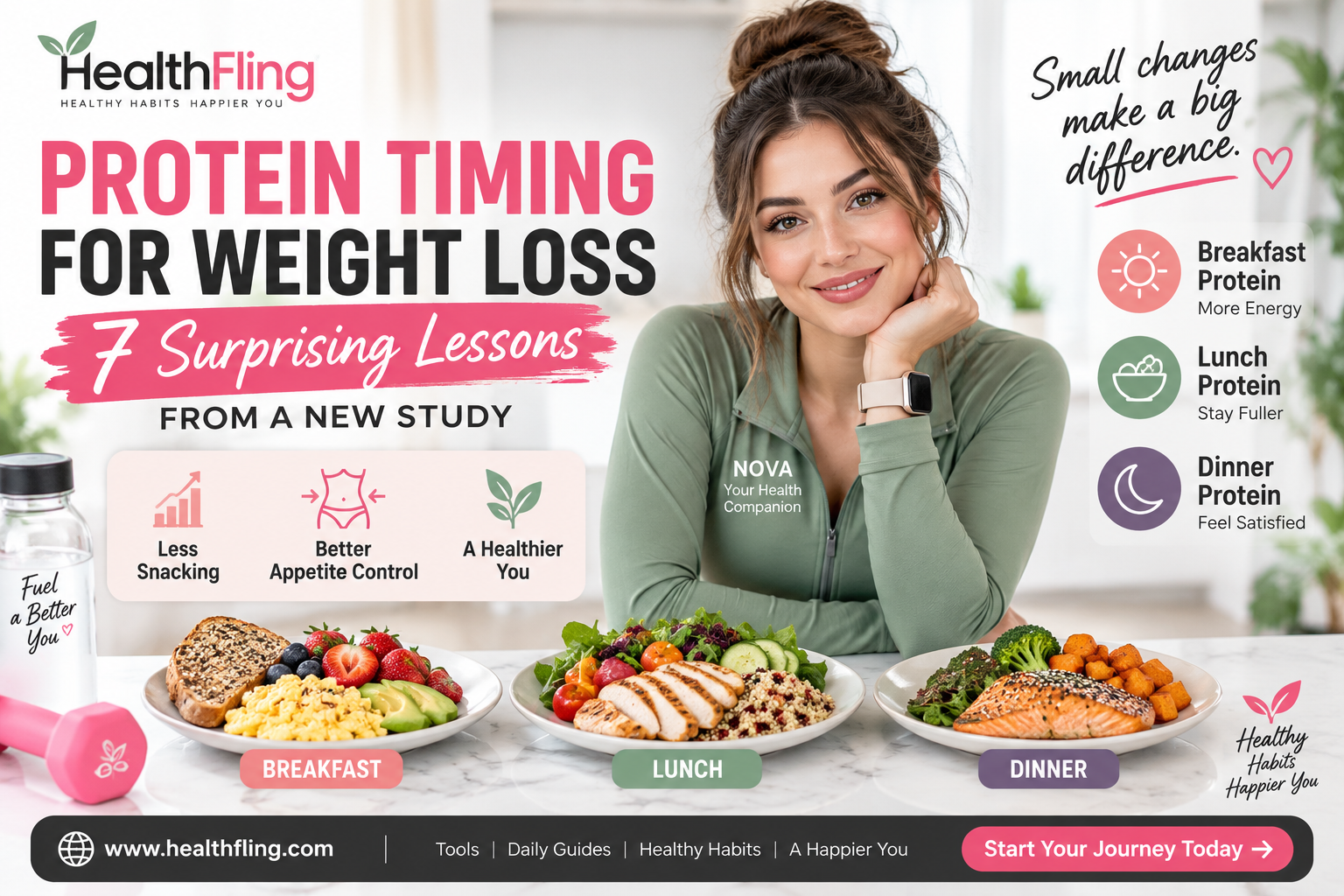
Protein timing for weight loss may deserve more attention than simply counting how many grams of protein you eat each day. New research suggests that spreading protein more evenly across breakfast, lunch and dinner may influence how much energy-dense snack food some women consume while following a weight-loss diet.
That does not make protein timing a new weight-loss trick. But it raises a useful question: if most of your daily protein arrives at dinner, could moving some of it earlier in the day make your eating pattern easier to manage?
Here are seven practical lessons from the research — including what the study found, what it did not prove, and how to apply the idea without turning every meal into a maths problem.
Table of Contents
- What the new study found
- How protein distribution may influence snacking
- Why protein timing isn't a magic trick
- Are you saving most of your protein for dinner?
- How to build a balanced protein day
- The bigger weight-loss picture
- The practical HealthFling takeaway
1. What Did the New Study Find About Protein Timing for Weight Loss?
A randomized controlled trial published in the Journal of the Academy of Nutrition and Dietetics examined whether distributing dietary protein differently across three meals affected women's motivation for and consumption of energy-dense snack foods during weight loss.
The study involved women aged 20 to 44 with a BMI between 28 and 45. Participants followed one of two protein patterns over 16 weeks.
One group distributed protein relatively evenly across breakfast, lunch and dinner. The other followed a more typical pattern in which protein intake was weighted more heavily toward dinner.
During the first eight weeks, participants followed a diet involving a 20% energy restriction and were provided with food. During the following eight weeks, they selected their own foods while being instructed to maintain their assigned protein pattern.
This makes protein timing for weight loss particularly interesting because the researchers were not simply comparing two different daily protein totals. They were investigating how the distribution of protein across meals could influence eating behaviour.
You can review the original study record through PubMed.
2. Protein Distribution May Influence Snacking
Among the 44 participants included in the analysis, researchers found an interesting difference in actual snack consumption.
The group distributing protein more evenly across meals consumed an average of 44.3 grams of the energy-dense snack foods offered during the laboratory test.
The group whose protein intake was more heavily skewed toward dinner consumed an average of 62.0 grams.
That's a difference of approximately 17.7 grams in that controlled setting.
The evenly distributed group also showed a lower relative reinforcing value for energy-dense snack foods. In simpler terms, those foods appeared to have less motivational pull relative to the alternative used in the experiment.
This is one reason researchers are interested in protein timing for weight loss: meal composition and timing may affect more than the total amount of protein consumed during the day.
Importantly, this finding should be interpreted in the context of the study rather than treated as proof that everyone will experience fewer cravings simply by changing meal timing.
3. Is Protein Timing for Weight Loss Really Effective?
Does protein timing for weight loss cause you to lose more weight? This study does not establish that.
It examined food motivation and snack intake within a weight-loss intervention. It should not be interpreted as evidence that eating protein at a particular hour automatically burns more fat or guarantees greater long-term weight loss.
The trial was also relatively small and involved women aged 20 to 44 with overweight or obesity. The findings therefore should not automatically be generalized to every adult, older person, athlete or person with a medical condition.
The more useful takeaway is narrower: where protein appears across your meals may be worth considering alongside how much protein you eat overall.
If you're unsure where to start with your daily intake, HealthFling's free Protein Calculator can provide a general estimate based on your details and goals.
4. Are You Saving Most of Your Protein for Dinner?
Think about a normal weekday.
In practice, protein timing for weight loss starts with looking at how protein is distributed across your everyday meals.
Breakfast might be toast, cereal or another meal containing relatively little protein. Lunch may be light. Then dinner arrives with chicken, fish, meat, beans or another substantial protein source.
Without deliberately planning it, someone can end up consuming a large proportion of the day's protein in the evening.
Instead of immediately trying to eat more protein, first look at your existing meals.
Ask yourself:
- Does breakfast contain a recognizable protein source?
- Does lunch contain enough satisfying food to carry me through the afternoon?
- Is dinner doing almost all the work for my daily protein intake?
If the answer to the last question is yes, redistributing some of your existing protein may be a simpler experiment than adding extra food to your diet.
5. A Practical Protein Timing for Weight Loss Approach
A practical protein timing for weight loss approach does not require eating at rigid times or tracking every gram.
You also don't need breakfast, lunch and dinner to contain precisely identical amounts of protein.
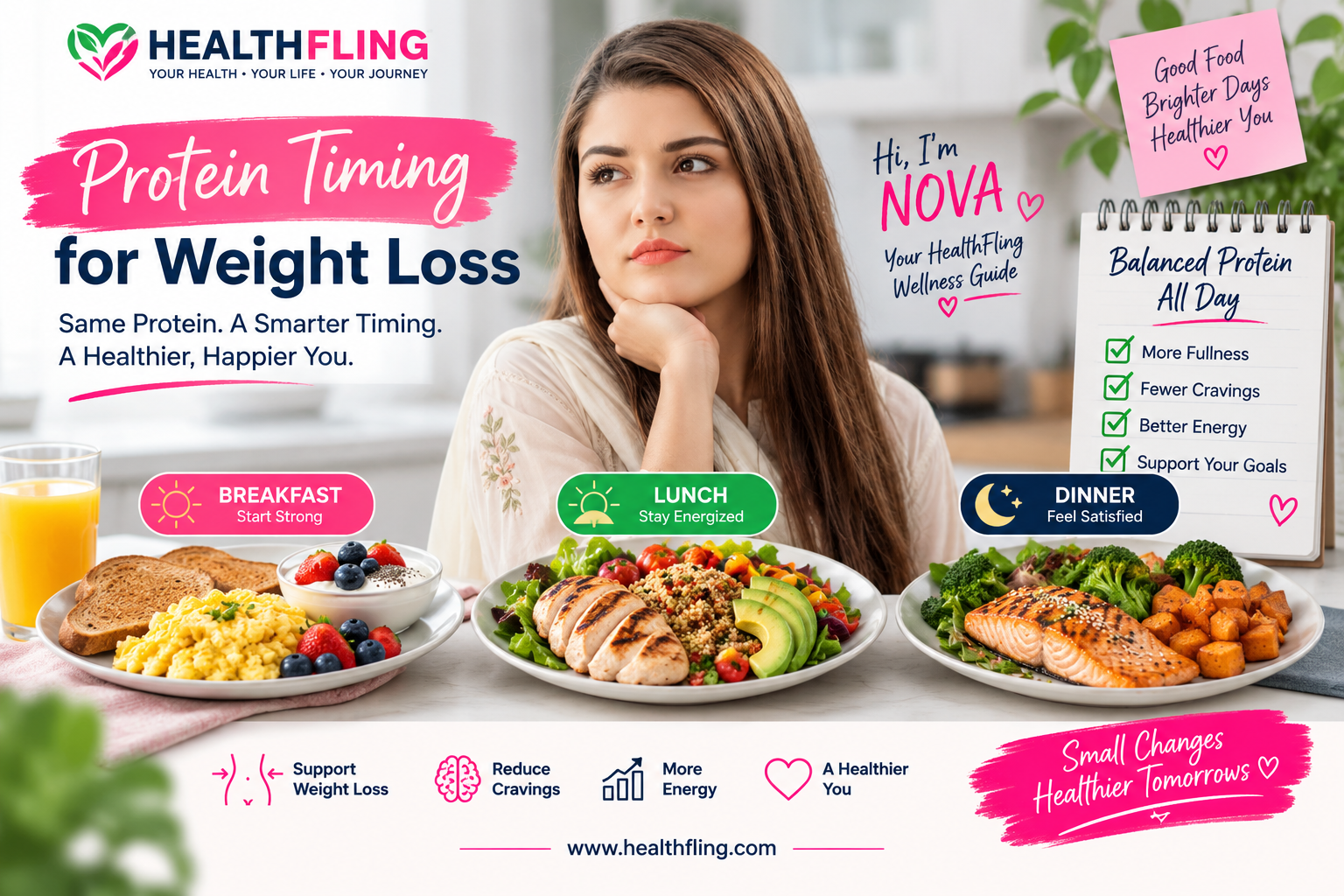
A more realistic approach is to include a meaningful protein source at each main meal.
Breakfast: Start With a Protein Source
Depending on your preferences, breakfast protein might come from eggs, Greek yogurt, cottage cheese or another protein-rich food that fits your eating pattern.
Lunch: Don't Leave All the Protein Until Later
Chicken, fish, tofu, beans, lentils or other protein-rich foods can be combined with vegetables, whole grains and other foods you enjoy.
Dinner: Keep It Balanced
Dinner can absolutely remain protein-rich. The goal is simply to avoid relying on dinner for almost your entire day's protein.
Want a general starting point for your overall nutrition needs? Use the HealthFling Calorie Calculator alongside the Protein Calculator. Both provide educational estimates rather than individualized medical prescriptions.
6. Protein Timing for Weight Loss Is Only One Part of the Picture
Protein timing for weight loss should be viewed as one part of an overall healthy eating pattern, not as a standalone solution.
Overall energy intake, diet quality, physical activity, sleep, appetite, medications, medical conditions and whether you can realistically maintain your routine can all matter.
That is why focusing exclusively on the timing of one nutrient can miss the bigger picture.
For broader guidance, the NHS healthy-weight guidance discusses sustainable approaches to managing weight.
The CDC's healthy-weight resources also cover sustainable weight management alongside nutrition, activity, sleep and other lifestyle factors.
You can explore HealthFling's Free Health Tools for BMI, calorie, protein, water and steps estimates, or start the HealthFling Journey for practical daily habit-building.
7. Protein Timing for Weight Loss: The HealthFling Takeaway
For most people, the useful way to think about protein timing for weight loss is as a meal-planning strategy rather than a quick fix.
The most useful message from this research isn't simply “eat more protein.”
It's to look at when the protein you're already eating shows up during your day.
If breakfast and lunch contain very little while dinner contains most of your daily protein, experimenting with a more balanced distribution may be reasonable.
For some women, the new research suggests that pattern may influence the pull and consumption of energy-dense snack foods during weight loss.
But it remains one piece of a much larger picture. Sustainable weight management still depends on an overall eating pattern and lifestyle you can realistically maintain.
Small changes that fit your life are usually more useful than complicated rules you can't sustain.
Ready to put the numbers into context? Build Your Free HealthFling Plan or choose a manageable activity from the HealthFling Quick Challenges.
Frequently Asked Questions About Protein Timing for Weight Loss
What is protein timing for weight loss?
Protein timing for weight loss means considering how your protein intake is distributed throughout the day. Rather than consuming most of it at one meal, some people may choose to include meaningful protein sources at breakfast, lunch and dinner.
Is it better to eat protein in the morning or at night?
There isn't one universally proven best time to eat protein for weight loss. The study discussed here compared a relatively even three-meal distribution with a pattern that concentrated more protein at dinner; it did not establish one specific clock time as ideal for everyone.
Can spreading protein throughout the day reduce snacking?
In this randomized trial, women assigned to a more evenly distributed protein pattern consumed less energy-dense snack food in a controlled test. More research is needed before assuming the same result will occur for everyone in everyday life.
Will eating more protein automatically make me lose weight?
No. Simply adding protein does not guarantee weight loss. Overall energy intake, dietary pattern, activity, sleep and individual circumstances also matter.
How much protein do I need per day?
Protein needs vary with factors such as body size, age, activity and individual circumstances. For a general educational estimate, try HealthFling's Protein Calculator. People with medical conditions or prescribed diets should seek individualized professional advice.
Research source: De Leon A, Roemmich JN, Casperson SL. Evenly Distributing Daily Dietary Protein Across Three Meals Reduces Women's Snack Food Reinforcement and Intake of Energy-Dense Snack Foods During Weight Loss: A Randomized Controlled Trial. Journal of the Academy of Nutrition and Dietetics. 2026;126(9):156391. View the study on PubMed.
HealthFling Editorial Note: This article provides general educational information and does not replace individualized medical or dietetic advice. If you have a medical condition, kidney disease, are pregnant, or follow a medically prescribed diet, discuss significant dietary changes with an appropriately qualified healthcare professional.