
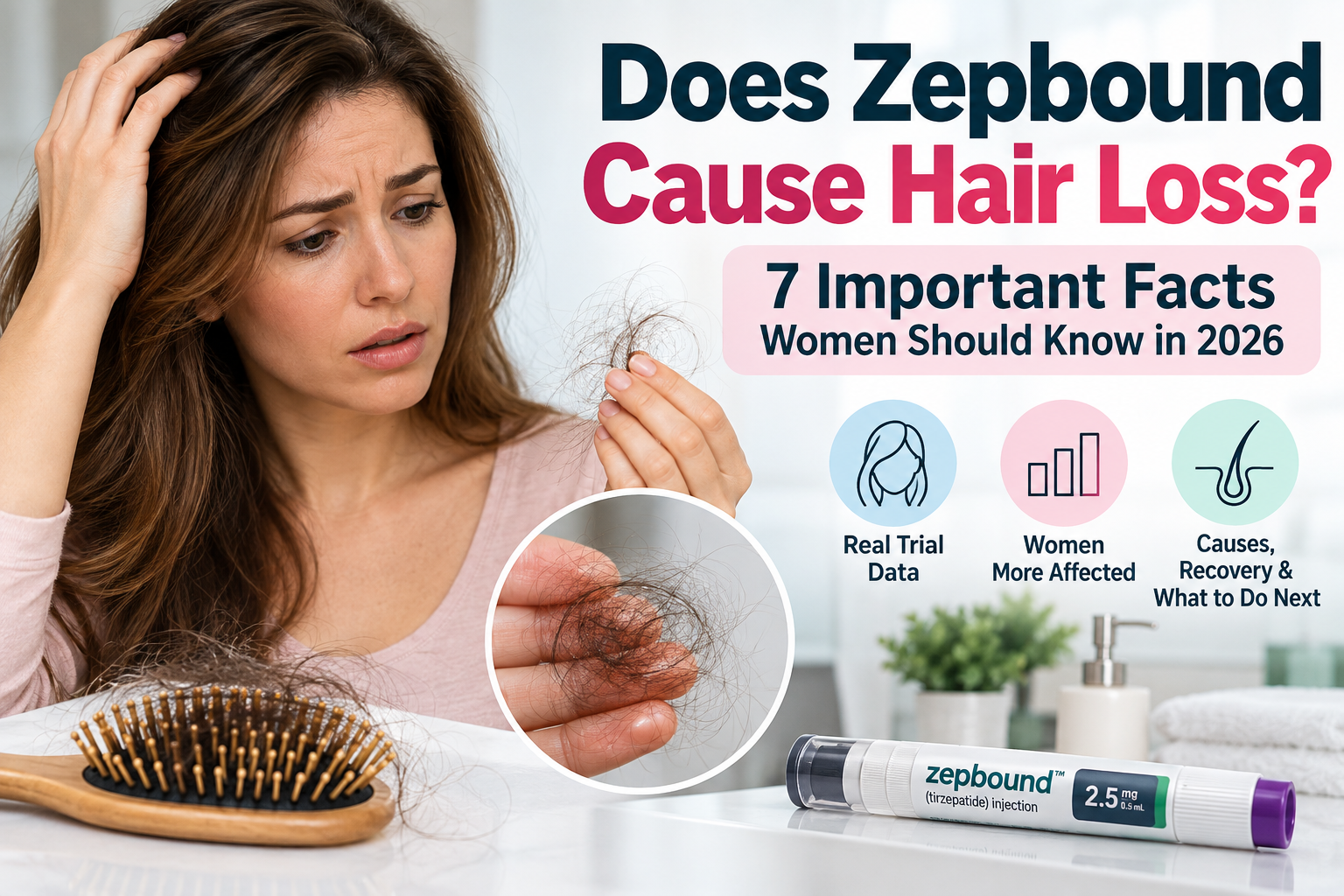
Does Zepbound Cause Hair Loss? 7 Important Facts Women Should Know in 2026
Does Zepbound cause hair loss? It is becoming an increasingly common question among women using tirzepatide for weight management.
Maybe you have started noticing more strands in the shower.
Perhaps your ponytail feels thinner than usual.
Or you may be considering Zepbound and have seen worrying stories online about unexpected shedding.
Current evidence shows that hair loss is a real reported adverse reaction during Zepbound treatment. But researchers still cannot say that tirzepatide directly damages hair follicles in every person who experiences shedding.
Current U.S. prescribing information for Zepbound lists hair loss among its commonly reported adverse reactions. In pooled Study 1 and Study 2 data, hair loss was reported in 7.1% of Zepbound-treated women compared with 0.5% of treated men. The label also states that these hair-loss reactions were associated with weight reduction. Lilly
You can review the official Zepbound prescribing information from Eli Lilly.
So, does Zepbound cause hair loss directly?
The most accurate answer is that Zepbound treatment is associated with hair loss, while rapid weight loss, lower calorie intake, nutritional changes and a temporary shedding condition called telogen effluvium may also contribute.
Here are seven important facts women should know.
1. Does Zepbound Cause Hair Loss According to Official Trial Data?
Yes. Hair loss is documented in Zepbound clinical trials.
In the pooled weight-reduction trials, the overall adverse-event table reported hair loss in approximately 5%, 4% and 5% of participants taking 5 mg, 10 mg and 15 mg Zepbound respectively, compared with 1% with placebo. Lilly
The sex-specific data are particularly interesting.
Hair loss was reported in:
- 7.1% of Zepbound-treated women
- 0.5% of Zepbound-treated men
- 1.3% of placebo-treated women
- 0% of placebo-treated men
The prescribing information specifically states that hair-loss reactions were associated with weight reduction. Lilly
These figures make the question does Zepbound cause hair loss especially relevant for women.
But the trial data do not prove that tirzepatide directly injures hair follicles.
For the wider drug-class evidence, read HealthFling’s GLP-1 Hair Loss: 7 Important Facts Women Should Know in 2026.
2. Women Reported Hair Loss Much More Often Than Men
The difference between women and men in the Zepbound trial data is notable.
Women receiving Zepbound reported hair loss far more often than men receiving the medication. Lilly
Researchers have not established one clear reason for this difference.
Possible influences may include:
- baseline female-pattern hair loss
- iron status
- hormonal factors
- dieting history
- amount of weight lost
- nutritional intake
- underlying medical conditions
- differences in recognizing or reporting shedding
A 2026 systematic review examining GLP-1-based therapies found that semaglutide and tirzepatide showed some of the strongest hair-loss signals in the available literature. PubMed
You can read the 2026 systematic review on GLP-1 therapies and hair loss.
So for women asking does Zepbound cause hair loss, the female trial signal is important — but it should not be interpreted as proof that every woman taking Zepbound will experience thinning.
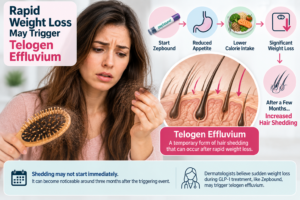
3. Rapid Weight Loss May Trigger Telogen Effluvium
One major explanation for hair shedding during weight-loss treatment is telogen effluvium.
Telogen effluvium is a form of diffuse shedding that can happen after a significant physical or emotional stressor.
Marked weight loss and extreme dieting are recognized triggers.
Hair loss may not begin immediately after the trigger. The shedding often appears later because hair follicles need time to move through the normal hair-growth cycle.
The British Association of Dermatologists explains that telogen effluvium often becomes noticeable roughly three months after a trigger, and marked weight loss is one recognized cause. British Association of Dermatologists
You can read the British Association of Dermatologists guide to telogen effluvium.
Imagine this pattern:
You start Zepbound.
Your appetite decreases.
You begin eating less.
Your weight falls significantly.
Several months later, you suddenly notice much more hair during washing or brushing.
That delay can make it feel as though the hair loss appeared unexpectedly.
The American Academy of Dermatology also says dermatologists believe sudden weight loss during GLP-1 treatment may trigger telogen effluvium. American Academy of Dermatology
So when patients ask does Zepbound cause hair loss, weight-loss-related telogen effluvium is one important explanation clinicians may consider.
4. Fresh 2026 Research Strengthens the Hair-Loss Signal
The concern is no longer based only on individual stories.
A 2026 systematic review and meta-analysis analyzed nine interventional studies involving 4,114 GLP-1 receptor agonist users.
The researchers found a significantly higher hair-loss risk among GLP-1 users compared with placebo. The pooled relative risk was approximately 3.25, and the association remained significant when researchers limited the analysis to randomized trials involving people with overweight or obesity. PubMed
Read the 2026 GLP-1 hair-loss meta-analysis on PubMed.
A separate 2026 meta-analysis examining more than one million patient exposures also found an alopecia safety signal among GLP-1 users. PubMed
Read the 2026 GLP-1 alopecia meta-analysis.
Importantly, Zepbound contains tirzepatide, which activates both GIP and GLP-1 receptors.
These studies strengthen the overall association between GLP-1-based weight-loss treatment and hair loss, but association still does not automatically prove that the medication directly damages hair follicles.
That is why does Zepbound cause hair loss still has a more nuanced answer than a simple yes or no.
5. Eating Too Little May Increase Nutritional Stress
Zepbound can significantly reduce appetite.
That may help support a calorie deficit and weight reduction.
But if appetite becomes very low, some people may also consume less protein, iron and other nutrients than their bodies need.
The American Academy of Dermatology says reduced food intake during GLP-1 treatment may mean the body gets less protein, vitamins and nutrients needed to support normal hair growth. American Academy of Dermatology
Potential nutritional concerns during aggressive weight loss may include inadequate:
- protein
- iron
- zinc
- vitamin B12
- folate
- healthy fats
- total calories
Nutrition is therefore an important part of answering does Zepbound cause hair loss, because decreased food intake may be one contributing factor.
That does not mean every person on Zepbound should immediately start taking hair supplements.
Instead, focus first on eating a balanced diet within the amount of food you can comfortably tolerate.
For a general estimate of protein needs, try the HealthFling Protein Calculator.
You can also read Protein Timing for Weight Loss.
For a general energy estimate, use the HealthFling Calorie Calculator.
These tools are educational and are not individualized medical prescriptions.
6. Zepbound Hair Loss May Be Temporary
If the shedding is mainly telogen effluvium caused by weight loss or physiological stress, the outlook can be reassuring.
The British Association of Dermatologists says the shedding phase of telogen effluvium commonly lasts around three to six months.
New hair then starts growing, although restoring previous density can take longer. British Association of Dermatologists
However, not every case of hair loss during Zepbound treatment is necessarily telogen effluvium.
Other causes can include:
- iron deficiency
- thyroid disorders
- female-pattern hair loss
- alopecia areata
- illness
- hormonal changes
- significant stress
- another medication
More than one cause can also occur at the same time.
This is why someone asking does Zepbound cause hair loss should pay attention to the pattern, timing and severity of their shedding.
7. Do Not Stop Zepbound on Your Own Because of Hair Loss
Hair loss can be emotionally difficult.
But suddenly stopping a prescribed medication without speaking to your healthcare professional may not address the real cause.
Your clinician may consider:
- how quickly your weight is changing
- how much food you currently eat
- protein intake
- iron status
- thyroid health
- other medications
- previous hair-loss history
- the pattern of shedding
- the benefits you are receiving from treatment
The American Academy of Dermatology recommends working with a dermatologist when hair problems develop during GLP-1 treatment so the specific type of hair loss can be identified. American Academy of Dermatology
Read the American Academy of Dermatology guidance on GLP-1 drugs, hair, skin and nails.
For women asking does Zepbound cause hair loss, investigation is usually more useful than immediately assuming the medicine must be stopped.
What Does Zepbound Hair Loss Usually Look Like?
When telogen effluvium is involved, hair tends to shed diffusely across the scalp.
You might notice:
- more strands in the shower
- more hair on the brush
- hair on your pillow
- less overall volume
- a thinner ponytail
- more scalp showing through the hair
Telogen effluvium usually does not cause one sharply defined bald patch.
If you notice smooth bald patches, significant scalp inflammation, pain or strongly patterned thinning, another condition may be responsible.
How Long After Starting Zepbound Can Hair Loss Begin?
There is no single timeline that applies to everyone.
If telogen effluvium is responsible, shedding may become noticeable several months after the trigger.
This means the timing can be deceptive.
Someone may start Zepbound, lose substantial weight and only later develop visible shedding.
Possible triggers during the same period may include:
- rapid weight loss
- lower calorie intake
- nutritional deficiency
- illness
- psychological stress
- medication changes
This delay is another reason does Zepbound cause hair loss cannot always be answered from timing alone.
Does Faster Weight Loss Increase the Risk?
Rapid or substantial weight loss is a recognized trigger for telogen effluvium.
The AAD advises that people prone to hair loss may benefit from avoiding excessively rapid weight loss while using GLP-1 medications. American Academy of Dermatology
The Zepbound prescribing information also explicitly says the observed hair-loss reactions were associated with weight reduction. Lilly
This does not mean losing weight is harmful.
It means trying to make Zepbound work “faster” by combining it with a severe crash diet may create unnecessary nutritional and physiological stress.
A more sustainable approach is usually more realistic.
For structured habit-building, explore the HealthFling 30-Day Journey.
What Should You Eat on Zepbound to Support Hair Health?
No specific food can guarantee that shedding will not occur.
But adequate nutrition can help reduce avoidable nutritional stress.
Prioritize Protein
Examples include:
- Greek yogurt
- eggs
- fish
- chicken
- lean meat
- tofu
- beans
- lentils
Use the HealthFling Protein Calculator for a general educational estimate.
Include Iron-Rich Foods
Examples include:
- lean meat
- beans
- lentils
- leafy green vegetables
- fortified foods
Do not start high-dose iron simply because your hair is shedding. Too much iron can also be harmful.
Include Fruit and Vegetables
These provide vitamins, minerals, fiber and other nutrients that support overall health.
Include Healthy Fats
Nuts, seeds, avocado and oily fish can add useful nutrition when appetite is reduced.
Avoid Extreme Restriction
The goal is not to eat as little as physically possible.
If Zepbound has already lowered your appetite significantly, an additional crash diet may make adequate nutrition more difficult.
Should You Take Biotin for Zepbound Hair Loss?
Not automatically.
Hair loss can have many different causes.
Biotin will not correct every problem that can lead to shedding.
For example, the true cause may be:
- telogen effluvium
- iron deficiency
- thyroid disease
- female-pattern hair loss
- another medication
Identifying the cause is more useful than taking random supplements.
Zepbound Hair Loss vs Wegovy Hair Loss
Both Zepbound and Wegovy have documented hair-loss reports in weight-management trials.
Zepbound contains tirzepatide.
Wegovy contains semaglutide.
Both can produce substantial weight reduction, but they are different medications and should not be assumed to have identical effects.
For the semaglutide evidence, read Does Wegovy Cause Hair Loss? 7 Facts Women Should Know in 2026.
For the broader cluster, read GLP-1 Hair Loss: 7 Important Facts Women Should Know in 2026.
This internal structure gives HealthFling three separate search intents:
GLP-1 hair loss → Wegovy hair loss → Zepbound hair loss
without targeting exactly the same keyword on every page.
When Should You See a Doctor or Dermatologist?
Consider professional evaluation if:
- hair shedding is severe
- shedding continues for months
- you develop bald patches
- your scalp becomes painful or inflamed
- you are struggling to eat enough
- you feel unusually weak or fatigued
- you suspect thyroid or iron problems
- you are considering stopping Zepbound because of hair loss
A dermatologist can help determine whether the pattern is telogen effluvium or another type of hair loss.
Frequently Asked Questions About Zepbound Hair Loss
Does Zepbound Cause Hair Loss in Women?
Yes, hair loss was reported during Zepbound clinical trials, and it was reported substantially more often among women than men in pooled Study 1 and Study 2 data. The official prescribing information reports 7.1% in Zepbound-treated women versus 0.5% in treated men. Lilly
Is Hair Loss an Officially Listed Zepbound Side Effect?
Yes. Hair loss is included among Zepbound’s most common adverse reactions in the current U.S. prescribing information. Lilly
Why Does Zepbound Cause Hair Loss?
The exact mechanism is not established. Rapid weight loss, telogen effluvium, lower calorie intake, nutritional changes and potentially medication-related effects may all contribute.
That is why does Zepbound cause hair loss does not currently have one single proven explanation.
Is Zepbound Hair Loss Permanent?
Not necessarily.
If the shedding is caused by telogen effluvium, hair commonly begins to recover once the trigger resolves. Regaining previous thickness can take longer. British Association of Dermatologists
How Long Can Zepbound Hair Loss Last?
There is no established Zepbound-specific duration.
For telogen effluvium generally, the shedding phase often lasts approximately three to six months. British Association of Dermatologists
Should I Stop Zepbound if My Hair Is Falling Out?
Do not stop or change a prescribed medication based only on an online article.
Discuss the shedding with your prescriber. A dermatologist may also help identify whether the problem is telogen effluvium or another form of hair loss.
Can Eating More Protein Prevent Zepbound Hair Loss?
Adequate protein supports normal body and hair function, especially when food intake has fallen.
But protein cannot prevent or treat every cause of hair loss.
Use the HealthFling Protein Calculator as a general educational starting point.
The Bottom Line
Does Zepbound cause hair loss?
Hair loss is a documented adverse reaction in Zepbound clinical trials, and it was reported considerably more often among women than men.
The official prescribing information also states that hair-loss reactions were associated with weight reduction. Lilly
Fresh 2026 evidence strengthens the broader association between GLP-1-based therapies and hair loss. A meta-analysis of nine interventional studies involving 4,114 users found a significantly increased risk compared with placebo. PubMed
But the evidence does not establish that tirzepatide directly damages the hair follicles of every person who experiences shedding.
For some people, rapid weight loss, reduced calorie intake, nutritional stress and telogen effluvium may contribute.
The best answer to does Zepbound cause hair loss is therefore:
Hair shedding is a real reported association, but the cause may differ from person to person.
If shedding develops, avoid crash dieting, protect nutritional intake and discuss persistent or severe hair loss with your healthcare professional.
For more evidence-based guidance, explore the HealthFling Free Health Tools.
HealthFling provides general educational information and is not a substitute for medical diagnosis or individualized treatment. Speak with a qualified healthcare professional about significant hair loss, nutritional deficiencies, medication side effects or any change to prescribed Zepbound treatment.
Trusted Research Sources
Official Zepbound Prescribing Information — Eli Lilly
2026 GLP-1 Hair-Loss Meta-Analysis — PubMed
2026 GLP-1 and Alopecia Meta-Analysis — PubMed
2026 Systematic Review of GLP-1 Therapies and Hair Loss — PubMed
American Academy of Dermatology — GLP-1 Hair, Skin and Nail Guidance