
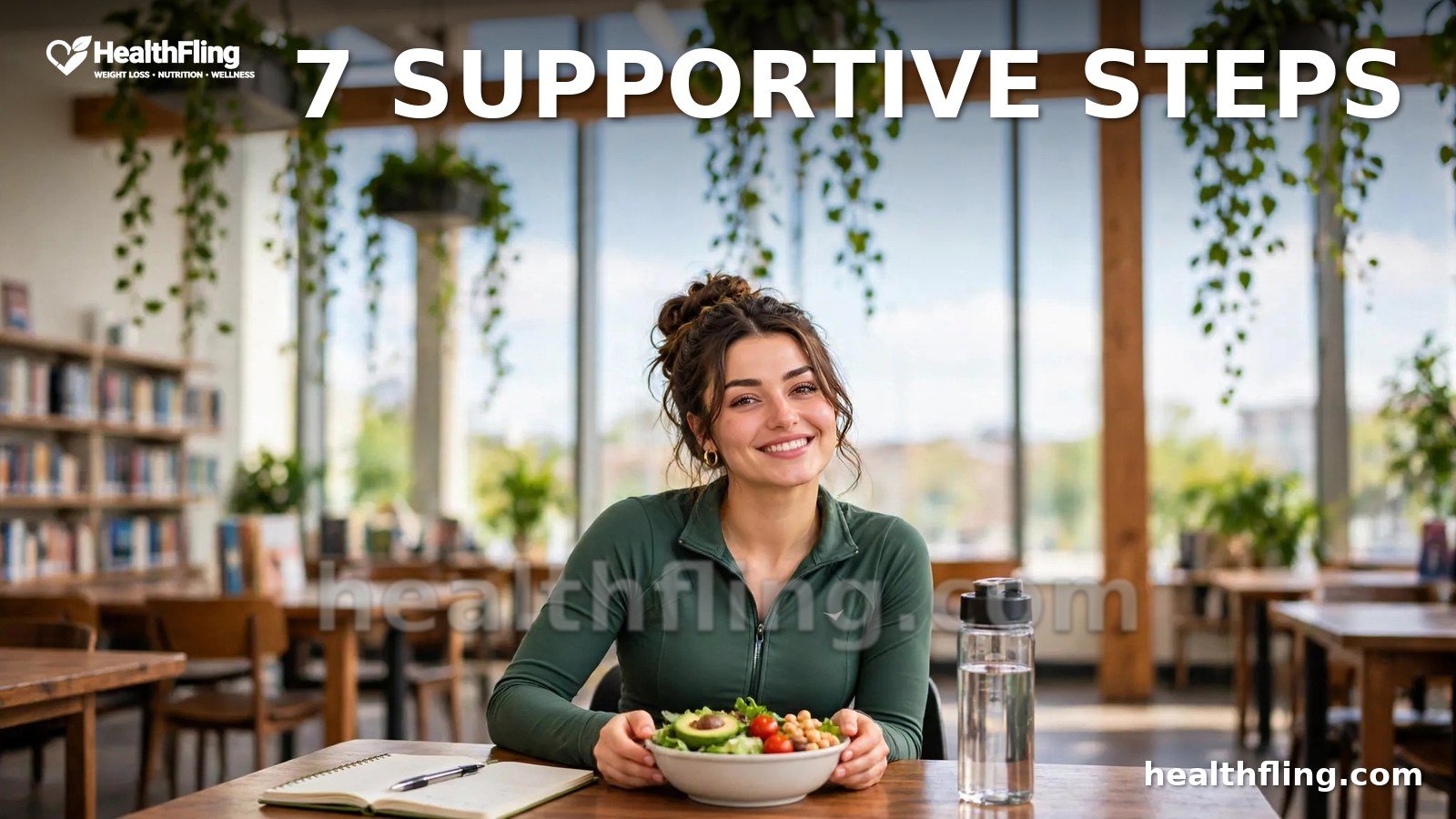
Healthy weight loss after body shaming begins with a decision that belongs to you. A comment about your body does not establish that you need to lose weight. At university, where meals, deadlines and friendships already take energy, the useful first step is to protect your wellbeing and ask what support you actually want.
This guide is for adults. Campus situations below are illustrative, not a real student’s testimonial or a promise of results. HealthFling provides general education, not an individual diagnosis or treatment plan.
1. Put a boundary between the comment and your next meal
Imagine a student hearing, “You have put on weight,” before a lecture. It can be tempting to skip lunch or promise a punishing gym session. A more useful response is a short boundary: “Please don’t comment on my body,” or “My health is something I discuss privately.” You do not need to explain your medical history or defend your food.
If the behaviour continues, write down what happened and contact an appropriate university support service. A trusted tutor, student wellbeing adviser or counselling service can help you work out your options. Choose a response that feels safe; confronting someone publicly is not a requirement.
2. Ask whether weight loss is appropriate for you
Healthy weight loss after body shaming should never be an automatic reaction to someone else’s opinion. Body size alone cannot describe your health, eating history or nutritional needs. Weight maintenance, better nourishment or support for body image may be more appropriate than weight loss.
Arrange a conversation with a qualified clinician or registered dietitian if you are unsure. Mention medicines, recent unintentional weight changes, fatigue, your usual eating pattern and any history of restrictive eating. If you are pregnant, underweight or recovering from an eating disorder, avoid starting a weight-loss plan without individual care.
The NIDDK guidance on respectful weight conversations explains that stigma can affect mental health, eating behaviours and access to care. You deserve a consultation that takes those concerns seriously.
3. Make regular campus meals easier
A long day of lectures can leave you choosing whatever is available at the last minute. Before changing portions, look at the practical problem: do you have time, money, refrigeration and somewhere to eat? Solving one of those barriers may be more helpful than downloading another diet app.
Try a flexible meal combination with a protein food, a starchy food and fruit or vegetables. Examples include a bean-and-rice bowl with vegetables, a chicken sandwich with fruit, or lentil soup with bread and yogurt. These are meal ideas, not prescribed portions or calorie targets.

- Early lecture: prepare oats and yogurt, or take toast and an egg if those foods suit you.
- Long laboratory session: pack a sandwich or leftovers and a snack for a permitted break.
- Shared kitchen: keep a short list of inexpensive staples, such as beans, rice, frozen vegetables and eggs.
- Canteen lunch: choose a satisfying main meal and add produce when available.
If healthy weight loss after body shaming is clinically appropriate for you, discuss a modest, sustainable energy reduction rather than cutting out entire food groups. The NIDDK eating and activity guide emphasises an eating pattern you can maintain. No single campus food makes or breaks that pattern.
4. Keep enjoyable foods in university life
Birthday cake, a takeaway with friends or a wedding meal does not require a compensatory fast. Plan around ordinary life instead. You might eat your regular meals beforehand, choose foods you enjoy at the event and return to your usual routine afterwards.
If an evening social starts late, an earlier meal or snack can help you arrive comfortably hungry. If the venue has limited choices, choose what works with your budget and dietary needs. There is no need to turn a social occasion into a public discussion about dieting.
5. Choose movement you would repeat without a scale reward
Consider a walk between buildings, a beginner class, swimming or a short strength session with appropriate guidance. Start with an amount that fits your current ability. Campus exercise should not become a punishment for eating or a way to earn your next meal. For healthy weight loss after body shaming, movement works best when it is something you enjoy and can repeat without dreading it.
Write down one small appointment, such as a ten-minute walk with a friend after a lecture. Review how it felt and whether the timing worked. Build from there rather than comparing your first week with someone else’s established routine.
6. Protect time for rest and routine
Exam weeks often disrupt shopping, sleep and meal breaks together. Make a minimum routine for those weeks: a few easy meals, a realistic bedtime window and a backup snack in your bag. A routine that survives a busy Tuesday is more useful than a perfect timetable you cannot follow.
The CDC approach to healthy weight loss includes eating patterns, movement, sleep and stress management. It is broader than a daily weigh-in. Avoid promising yourself a specific change before graduation, a party or another deadline.
7. Track wellbeing and ask for help early
Choose two or three practical measures: eating lunch regularly, walking comfortably to class, concentration during afternoon study or keeping a planned appointment. If weighing yourself causes distress or drives restrictive behaviour, discuss other ways to follow your health with your care team.
Healthy weight loss after body shaming does not require handling everything alone. Ask a friend for company at lunch, a student adviser about food support or a dietitian for help adapting meals. Tell a clinician or counsellor if food fears, bingeing, purging, compulsive exercise or persistent distress affect your day.
Common questions about healthy weight loss after body shaming
Should I lose weight to stop people commenting?
No. Comments are not a medical assessment, and changing your weight does not guarantee their behaviour will change. Boundaries and support are valid regardless of body size.
Can I make progress without counting every calorie?
You can work on consistent meals, practical food choices and movement without detailed tracking. Whether an energy target is useful depends on your circumstances and preferences. A dietitian can help you choose an approach.
What if my budget is very small?
Start with the resources you have. Ask student services about food assistance and look for affordable staples you enjoy. A plan requiring expensive powders, special snacks or a paid gym may not fit your needs.
What can I do today?
Eat your next regular meal, write down a boundary you can use and identify one person who will support you without judging your body. Those are concrete steps even if weight loss is not your goal.
A first-week campus checklist
- Identify one reliable lunch option for your busiest day.
- Choose one enjoyable movement break.
- Prepare a response to unwanted body comments.
- Book professional support if you need help deciding on a health goal.
Your next step: choose one item, try it this week and review whether it made university life easier. Healthy weight loss after body shaming starts with one kind step, not a complete overhaul. Your dignity is not conditional on changing your weight.